Contents
- What is Minoxidil?
- What is minoxidil used for?
- What hair conditions does minoxidil treat?
- Can minoxidil really grow hair?
- Using minoxidil after a hair transplant
- Can you use minoxidil right after a hair transplant?
- How to use after a hair transplant?
- What hair treatments can be combined with minoxidil?
- What are the side effects of minoxidil?
- When to use minoxidil with caution?
- Frequently Asked Questions
What is Minoxidil?
Minoxidil is one of the most extensively researched topical agents for the treatment of hair loss. Used in both men and women, this medication has the potential to increase hair density, particularly in cases of androgenetic alopecia (male-pattern and female-pattern hair loss).
Minoxidil was originally developed as an oral medication for high blood pressure; however, its topical form is now widely used in the treatment of hair loss due to its stimulating effect on hair follicles.
What is minoxidil used for?
Minoxidil is a topical agent believed to stimulate hair follicles and help prolong the anagen phase; studies indicate that minoxidil may support hair growth by improving blood flow to hair follicles and stimulating growth signals. Clinical reviews and analyses indicate that minoxidil provides significant benefit, particularly in cases of early and mid-stage androgenetic alopecia. Generally, the effect begins within a few months; the most pronounced results are seen after 6–12 months.
Although the exact mechanism of action is not fully understood, the following mechanisms are highlighted:
• Increasing blood flow to the hair follicle,
• Extending the anagen (growth) phase,
• Supporting follicular cell proliferation and growth signals.
Topical formulations are typically applied as solutions or foams at concentrations of 2% (mostly for women) and 5% (mostly for men). Efficacy varies from person to person; the benefits, which begin early on and become more pronounced in the middle stages, are maintained with regular use.
What hair conditions does minoxidil treat?
Minoxidil can be used not only for androgenetic alopecia but also as an adjunctive treatment for various hair disorders. The main areas of application in clinical practice are as follows:
• Androgenetic alopecia (male and female pattern hair loss): Minoxidil has the strongest evidence of efficacy for this condition. It slows down the thinning of hair follicles and promotes new hair growth.
• Temporary hair loss (telogen effluvium): In cases of hair loss caused by stress, postpartum periods or systemic diseases, minoxidil may help hair transition more quickly into the anagen phase.
• Alopecia areata: Minoxidil is not sufficient on its own for this autoimmune condition, but when combined with other treatments, it can play a supportive role in promoting hair growth.
• Post-hair transplant support: It may be used with the surgeon’s approval to accelerate the growth of grafts and protect existing surrounding hair.
• Thinning hair in women: In cases of common hair thinning caused by hormonal or genetic factors, minoxidil may help increase hair density.
Minoxidil is most effective for androgenetic alopecia, but it can also be used as a supportive treatment for other types of hair loss under medical supervision. In all cases, a personalised treatment plan and expert consultation are essential.
Can minoxidil really grow hair?
Yes, with the right patient selection and regular use, minoxidil can promote new hair growth and slow down the thinning of existing hair; however, one should not expect miraculous, instant results. Its use following a hair transplant requires careful timing and a doctor’s approval.
Minoxidil may encourage the transformation of fine vellus hairs into terminal hairs and increase hair density; however, it does not restore completely lost follicles. Randomised controlled trials have shown that topical minoxidil increases hair density and hair shaft diameter, but efficacy varies from person to person. The benefits gained usually reverse when the medication is stopped, so consistency is important.
Mechanism of action of minoxidil
• Duration of action: The first clinical changes usually begin around 3 months; the most pronounced results are seen between 6 and 12 months.
• Efficacy: An increase in hair density and hair shaft diameter can be achieved in cases of early- and mid-stage androgenetic alopecia. Revival of completely lost, sclerotic follicles is not expected.
• Continuity: The effects of minoxidil generally reverse when the medication is discontinued; therefore, long-term use is necessary for most patients.
• Gender differences: Effects can be observed in both men and women; lower concentrations are generally preferred in women, and the application regimen is determined by the doctor.
Effect | Onset time | Duration | Side effect | |
Early androgenetic alopecia | Moderate to high | Short-term onset | Continuous use | Low to moderate |
Advanced baldness | Low | Limited short-term benefit | Continuous | Low to moderate |
Post-hair transplant support | Supportive | 2–6 weeks after surgery (with surgeon’s approval) | 6+ months recommended | Moderate (depending on sensitivity) |
Using minoxidil after a hair transplant
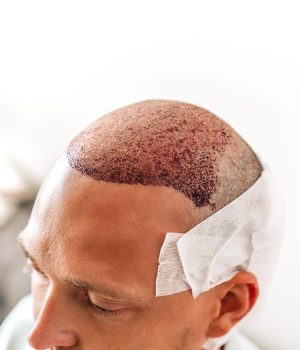
The use of minoxidil following a hair transplant is considered a supportive approach. The objectives are to promote the growth of the transplanted grafts, protect the hair, and increase overall density. However, timing and medical approval are of critical importance.
The timing and key considerations for the use of minoxidil following a hair transplant are as follows:
• Initial recovery period (0–2 weeks): As this is the period when grafts settle and scabbing occurs, the application of topical agents is generally limited.
• 2–6 weeks: Minoxidil may be started or postponed depending on the surgeon’s assessment; some surgeons prefer to begin after 4 weeks.
• Post-initiation: Minoxidil may accelerate post-transplant growth; however, if scalp sensitivity, irritation or contact dermatitis develops, application should be discontinued and the doctor consulted.
Can you use minoxidil right after a hair transplant?
In the first few weeks, the mechanical stability of the grafts and wound healing are the main priorities; early topical application may damage the grafts or cause irritation.
How to use after a hair transplant?
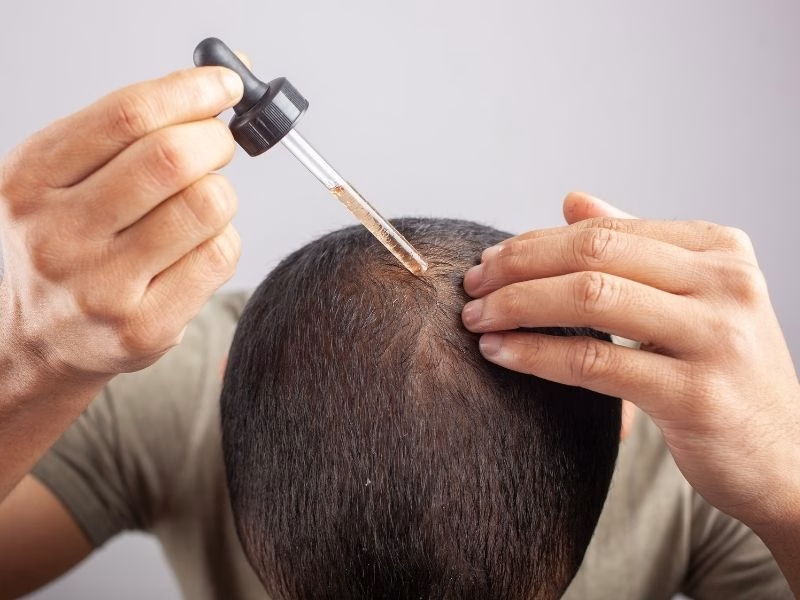
Wash your hands thoroughly and dry them before using minoxidil. Apply to a clean, dry scalp. Avoid contact with the nose and eyes; consult your doctor if any unwanted side effects occur. When using minoxidil, please note the following:
• Form selection: 2% and 5% solution or foam. The foam may be preferred as it does not leave a greasy feeling on the scalp and is easy to apply.
• Dosage and frequency: It is usually applied once or twice a day; follow the instructions on the product label or as advised by your doctor.
• Application technique: Apply directly to a clean, dry scalp; it may be gently massaged in with the fingertips. Avoid contact with the eyes.
• Drug interactions: Consult a dermatologist before using with other topical products; inform your doctor if you have a history of systemic diseases or heart disease.
• Duration: Regular use for at least 6–12 months is recommended to assess effectiveness; a plan for discontinuing the medication should be made in consultation with your doctor.
What hair treatments can be combined with minoxidil?
Although minoxidil is an effective treatment option on its own, it can be combined with other methods to achieve better results in combating hair loss. Commonly used combinations in clinical practice include:
• PRP (Platelet-Rich Plasma) therapy: Platelet-rich plasma, obtained from the patient’s own blood, is injected into the scalp. When combined with minoxidil, follicle activation may be enhanced.
• Mesotherapy: Injections of vitamins, minerals and amino acids, when used alongside minoxidil, can nourish the hair follicles and deliver stronger results.
• Laser treatments: Low-level laser light stimulates hair follicles; when used in conjunction with minoxidil, it can accelerate hair growth.
• Stem cell therapy: Stem cell-based treatments can be combined with minoxidil to support the regeneration of hair follicles and promote hair growth.
• Post-hair transplant support: Minoxidil can be used, with the surgeon’s approval, to accelerate the growth of grafts after transplantation and to protect the surrounding existing hair.
Although minoxidil is an effective treatment on its own, stronger and more lasting results can be achieved when combined with medications, injection therapies, laser treatments and hair transplants. However, each combination must be tailored to the individual and must be administered under the supervision of a hair transplant specialist.
What are the side effects of minoxidil?
Minoxidil is generally well tolerated, but some side effects may occur. These side effects include:
• Scalp irritation, itching, and redness (the most common)
• Contact dermatitis (particularly associated with excipients such as propylene glycol found in the solution form),
• Unwanted hair growth on the face or body (hypertrichosis) may rarely occur.
• Systemic effects are very rare; however, cardiovascular effects may occur in cases of excessive absorption or oral use.
If any side effects develop, stop using the product and consult your doctor. Your doctor may recommend an alternative formulation (foam vs. solution) or a different concentration.
When to use minoxidil with caution?
Caution should be exercised when using minoxidil in certain circumstances, and it must be used under medical supervision.
• The use of topical minoxidil in women who are pregnant or breastfeeding requires a doctor’s assessment.
• Individuals with heart disease, low blood pressure, or a risk of interaction with certain medications should be under medical supervision.
• In cases of complete baldness (where hair follicles have been completely lost for a long time), minoxidil alone provides limited benefit; hair transplantation or combination therapies may be considered.
Minoxidil is a scientifically supported, effective topical treatment option for both men and women with early to moderate hair loss. Its use as a supportive measure following hair transplantation may be beneficial, but timing, surgeon approval and individual assessment are essential. The most appropriate approach is to plan the treatment duration, monitoring of side effects and management of patient expectations in consultation with the hair transplant surgeon.
For further information on hair transplant treatment and the use of minoxidil following a hair transplant, you may consult Aesthetic, Plastic and Reconstructive Surgery Specialist Op. Dr Şerif Yavuz, who practises in Istanbul, Turkey. Please contact us for a personalised treatment plan.
Frequently Asked Questions
How long does it take for minoxidil to take effect?
The first changes usually begin around 3 months, and you can see noticeable results between 6 and 12 months.
Can minoxidil be used immediately after a hair transplant?
Generally not; surgeons recommend waiting the first 2–6 weeks for the grafts to settle. The start date is determined based on the surgeon’s assessment.
What happens if minoxidil is stopped?
Any gains achieved may be reversed within a few months; therefore, long-term use is necessary for most patients.
Can women use minoxidil?
Yes, women can also use minoxidil. In fact, minoxidil is one of the most commonly prescribed topical treatments for female-pattern hair loss. While the 2% solution is more commonly used in women, the 5% foam formulation may also be preferred in some cases. The use of minoxidil during pregnancy and breastfeeding is not recommended without medical supervision.